Paintings, collage and sculpture by Chandni Padia, Tamer Karam, Ms. Petunya, Cristina Gabriela and Sophiko. Presented by Communiverse and NOA at WETEX 2026.
Chandni Padia
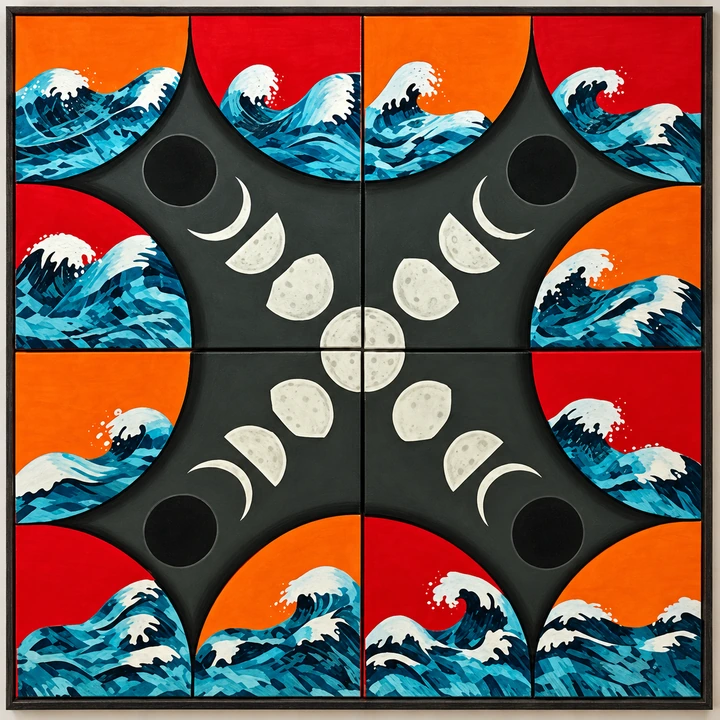
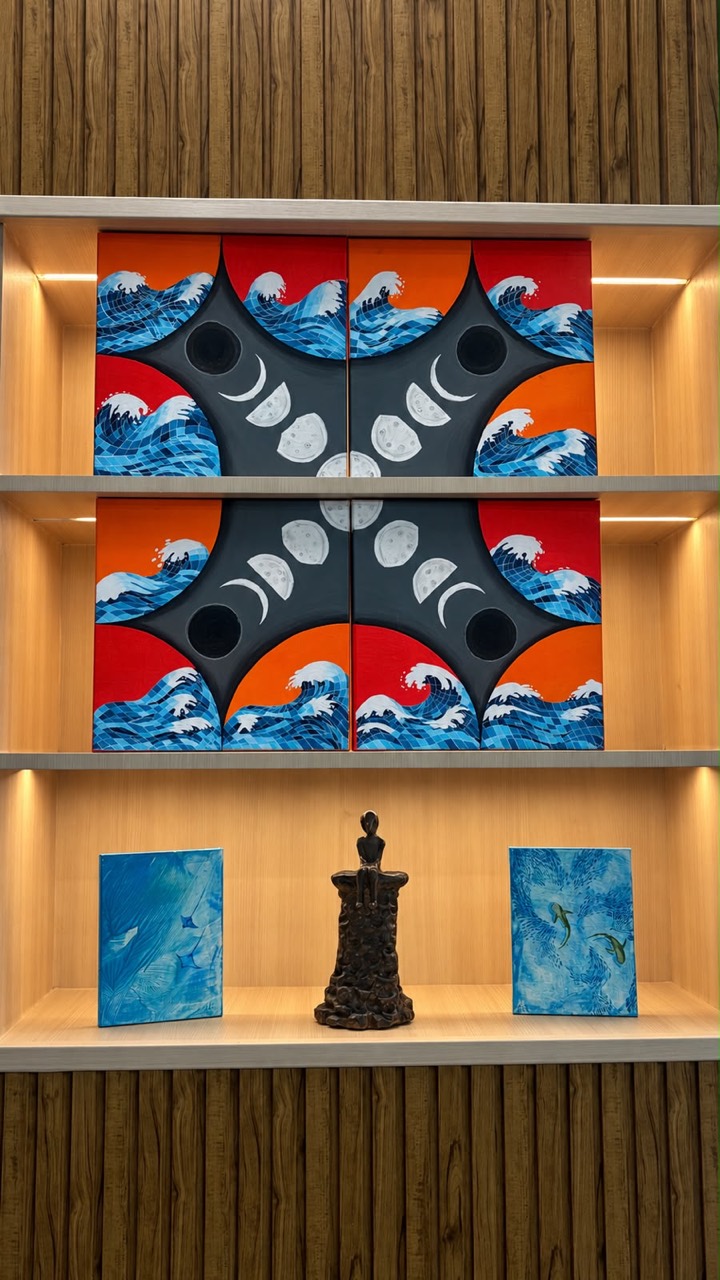
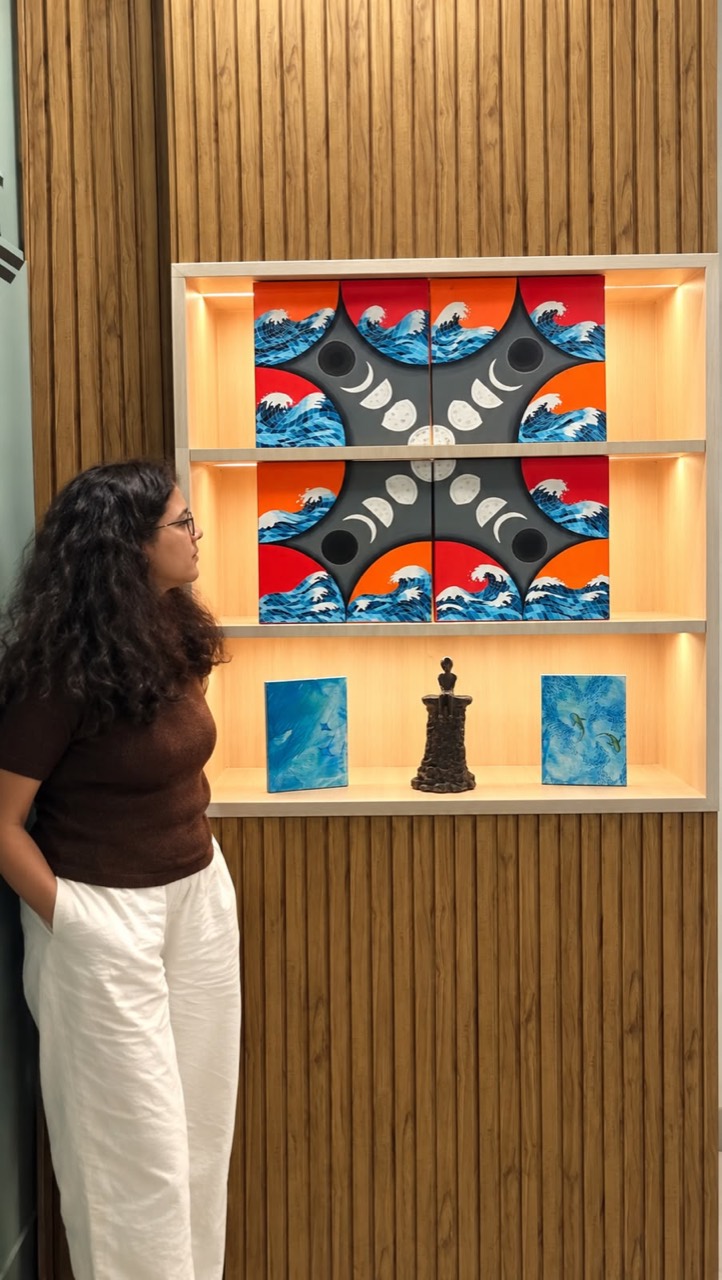
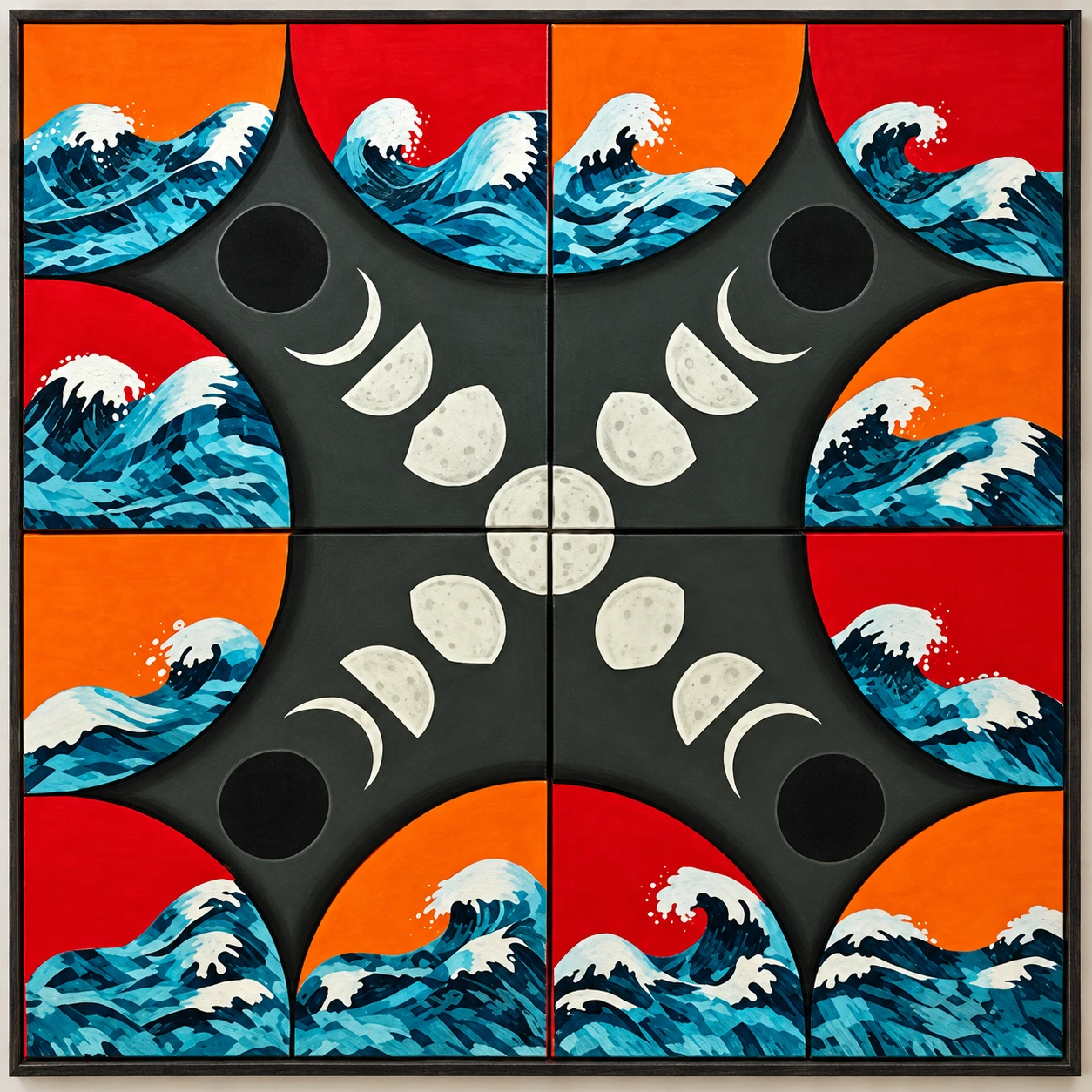
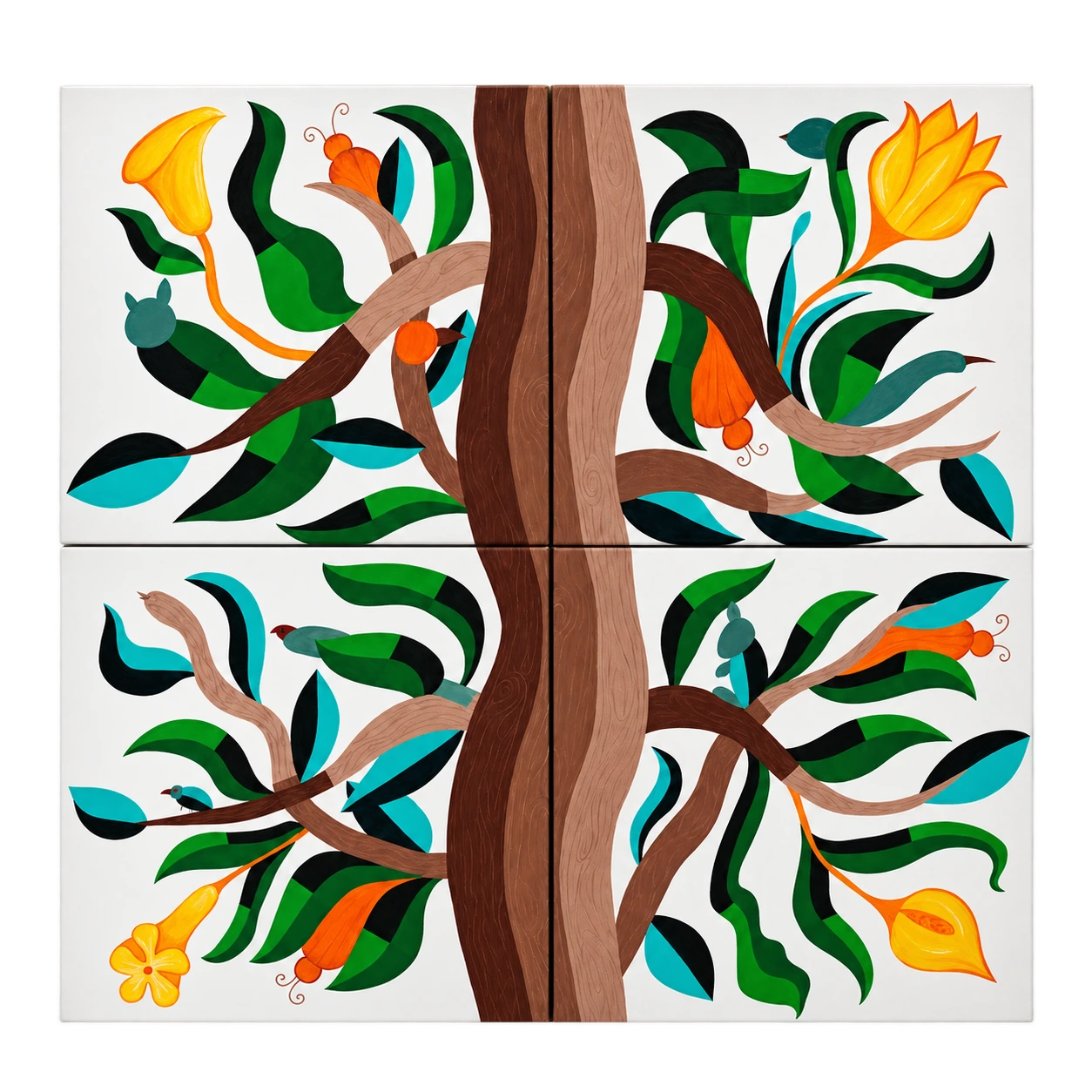
Moon phases, branching forms and the natural world unfold across two compositions of four canvases.
Waves meet at a shared centre, then turn outward. Moon phases hold the rhythm of return and renewal.
Read the artwork statement
Compass of the Sea reflects the ocean’s instinct to leave and come back. Waves enter from the four cardinal directions, north, south, east and west, moving towards a shared centre before turning outward once more. Arranged across four canvases, their repeated motion transforms the composition into a continuous cycle rather than a fixed scene.
The phases of the moon form the quiet centre of the work, acknowledging its gravitational influence on water and the changing tides. As the moon waxes, wanes and returns, the sea follows its rhythm, advancing, withdrawing and beginning again.
The work considers return not as a repetition of what has already happened, but as renewal. Like water returning to the shore, each arrival carries the memory of its journey while making space for another beginning.
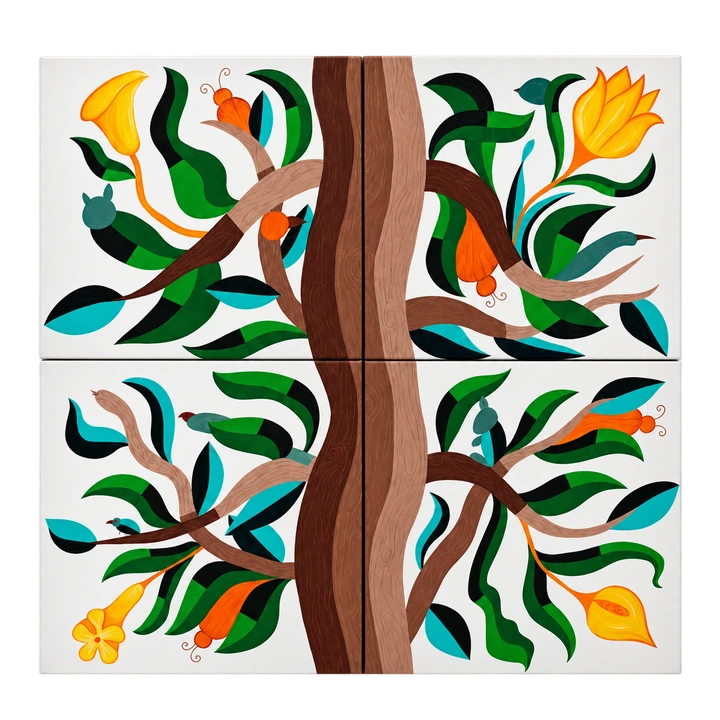
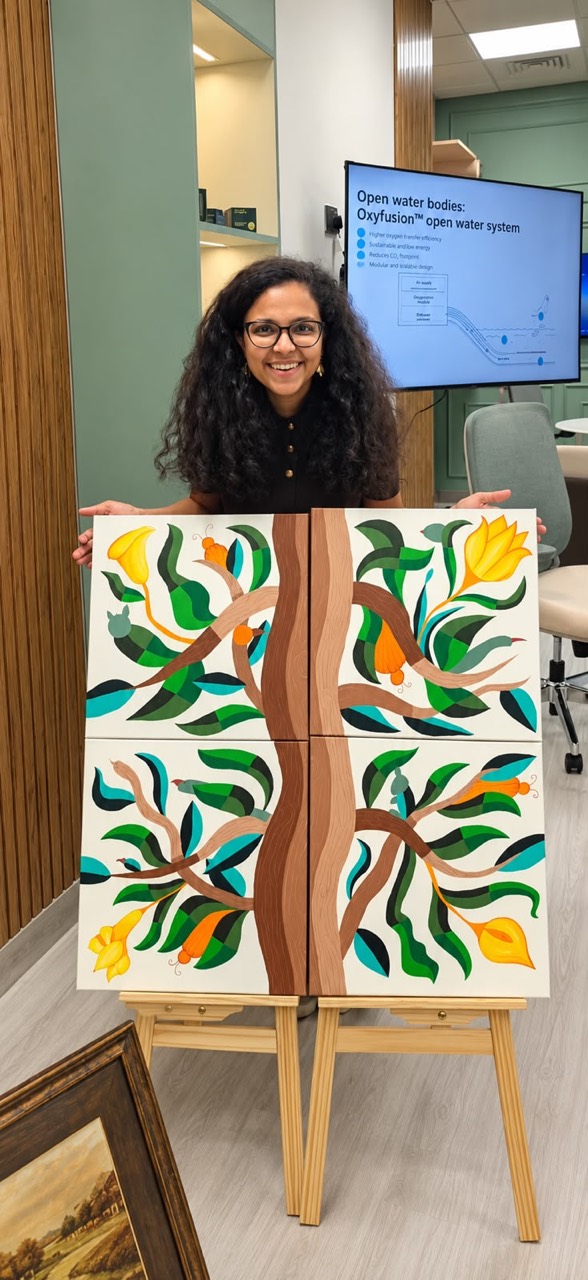
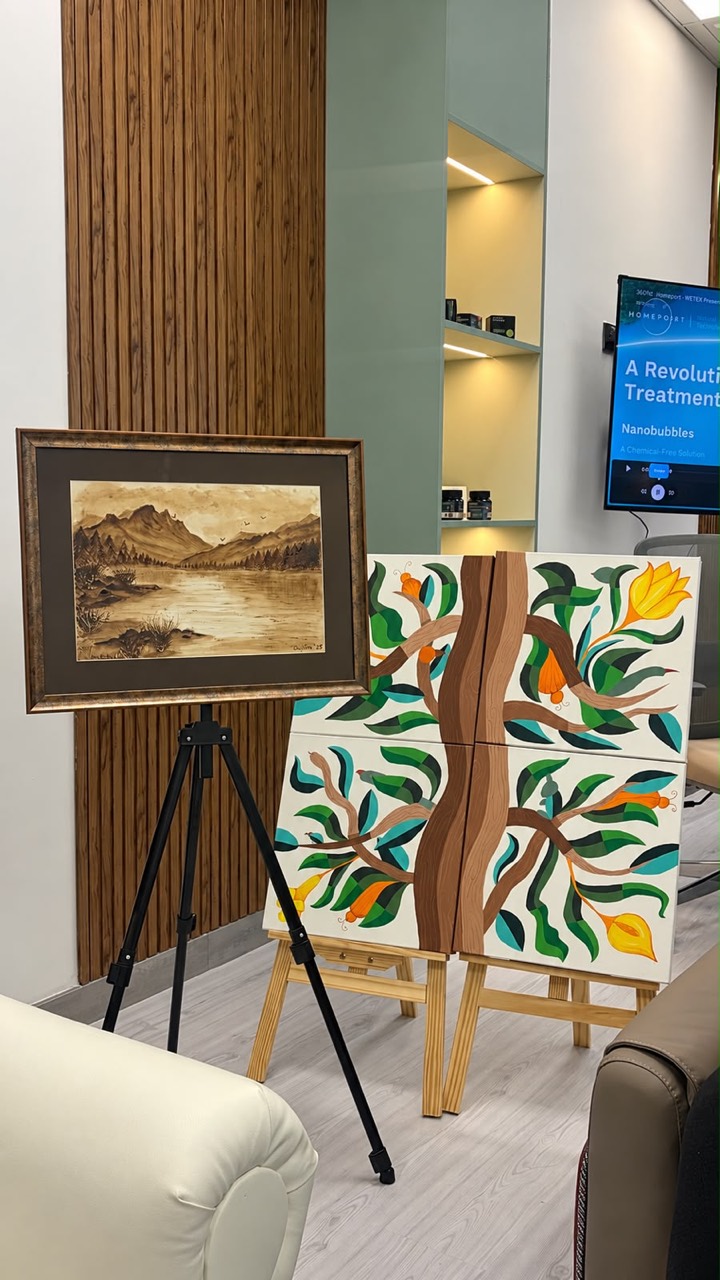
Branches and leaves spread across four canvases, with birds and animals tucked among the growth and yellow-orange flowers. The panels can be rearranged or viewed upside down, changing the relationships between forms and inviting new discoveries.
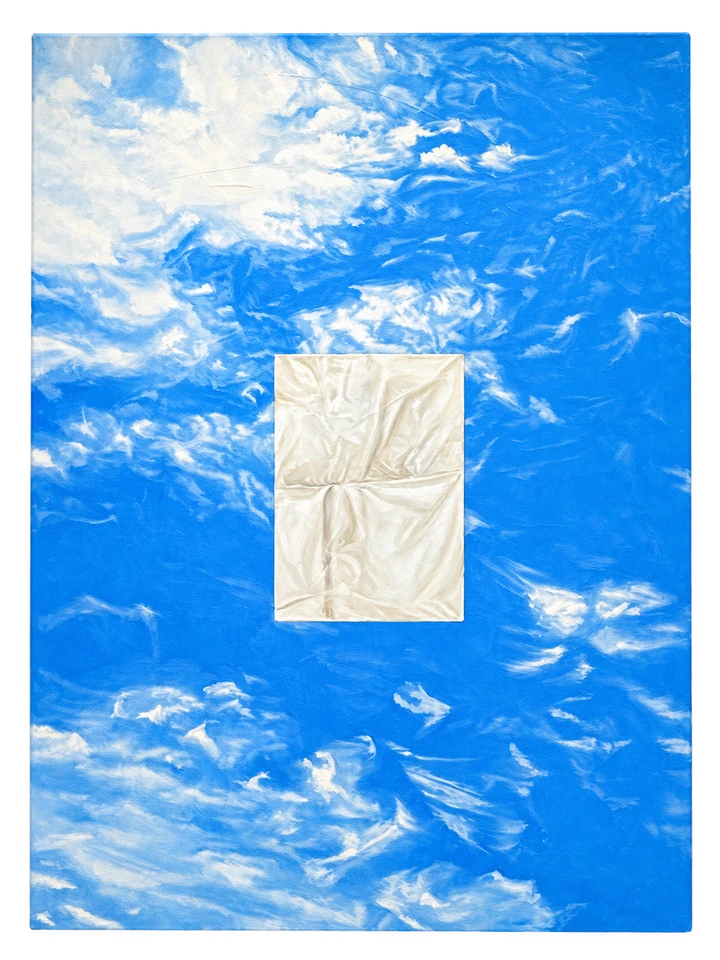
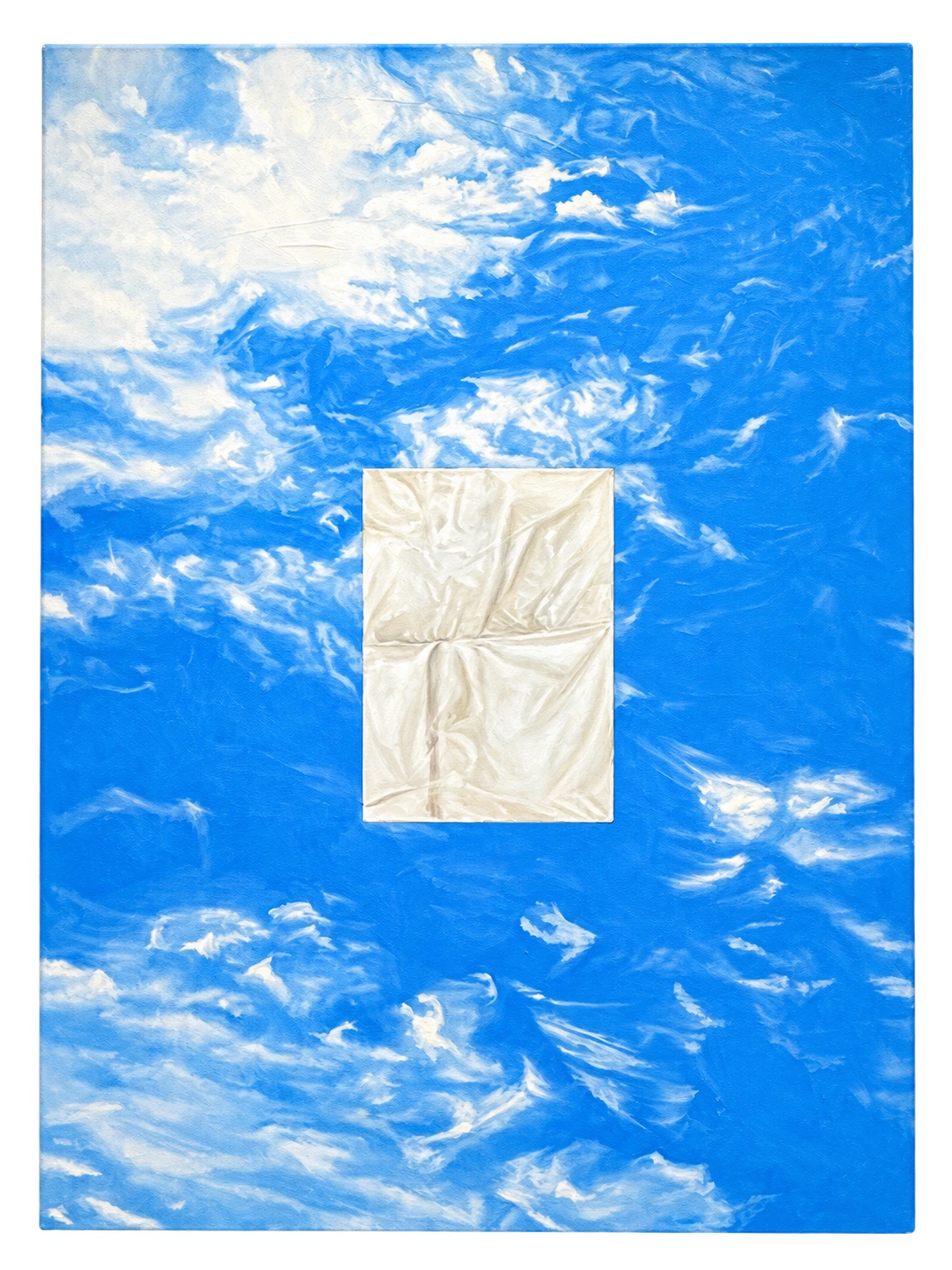
Wisps of white cross a blue sky, interrupted by a pale folded rectangle at the centre.
Read the series statement
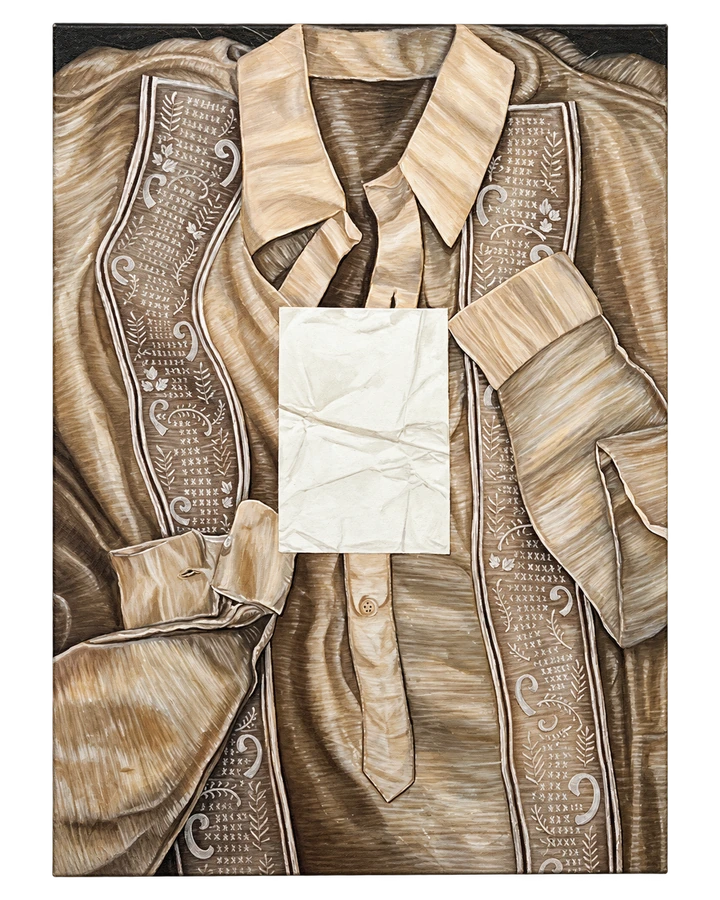
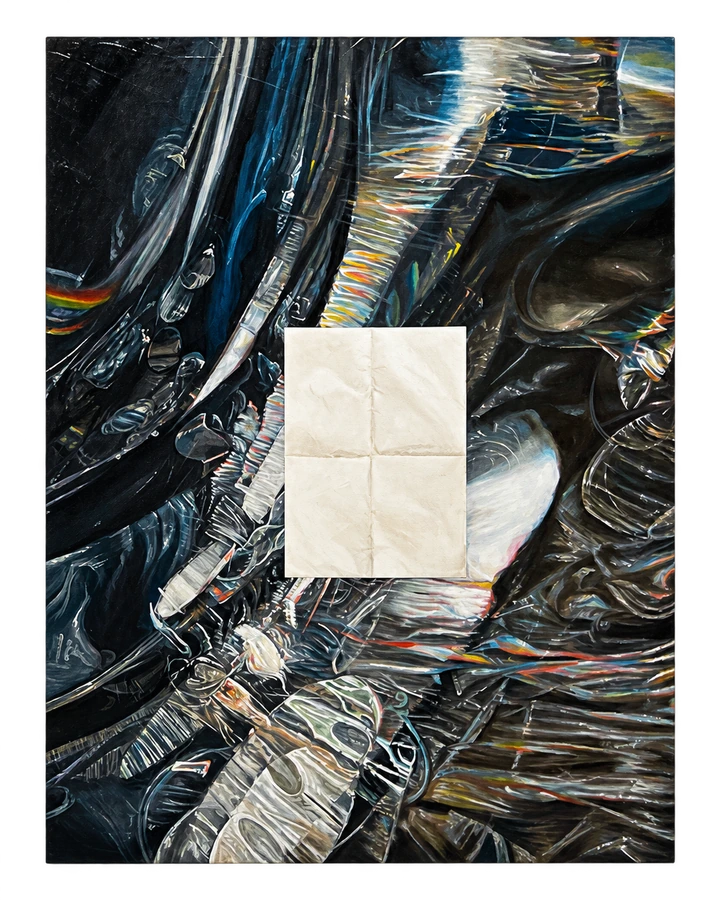
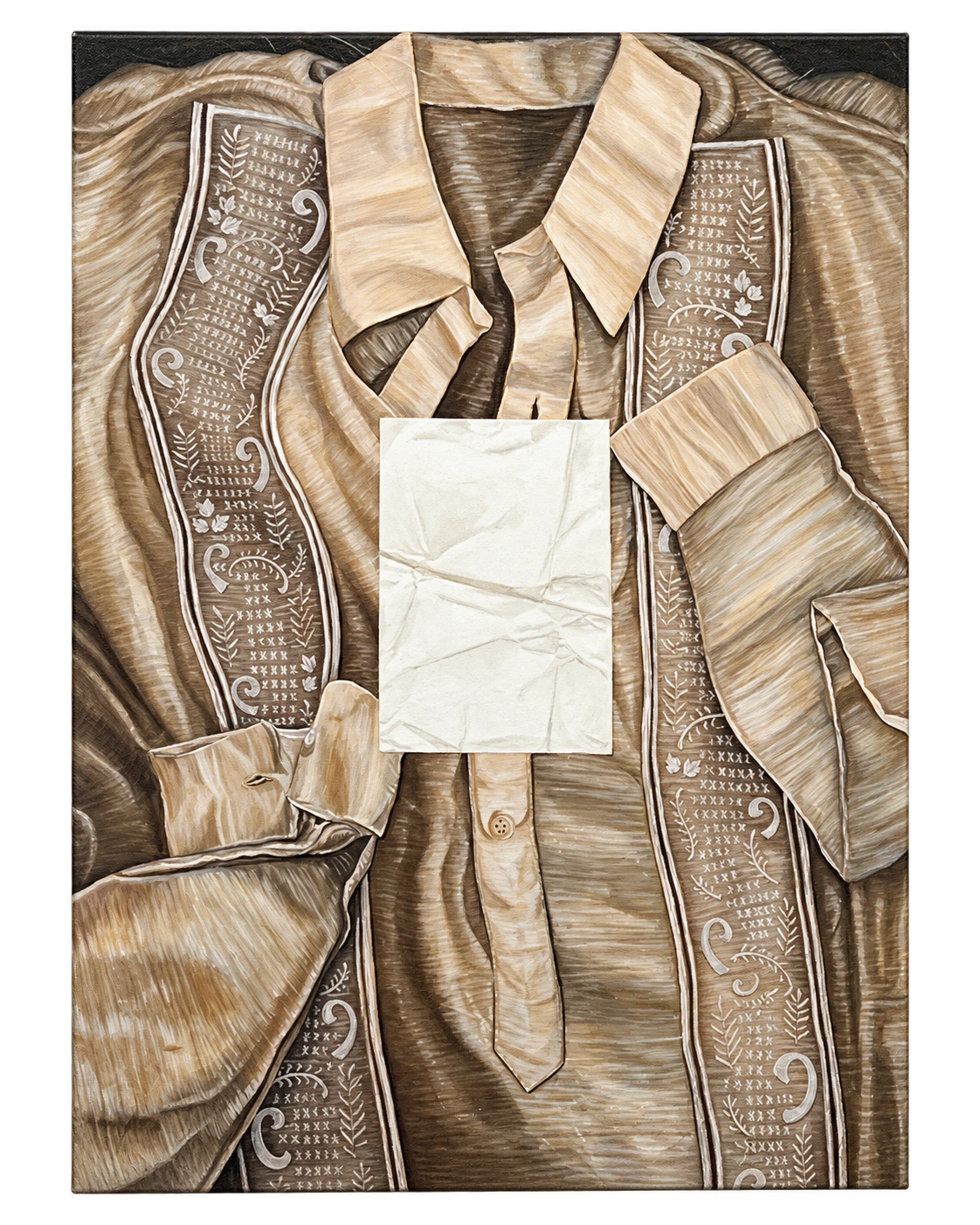
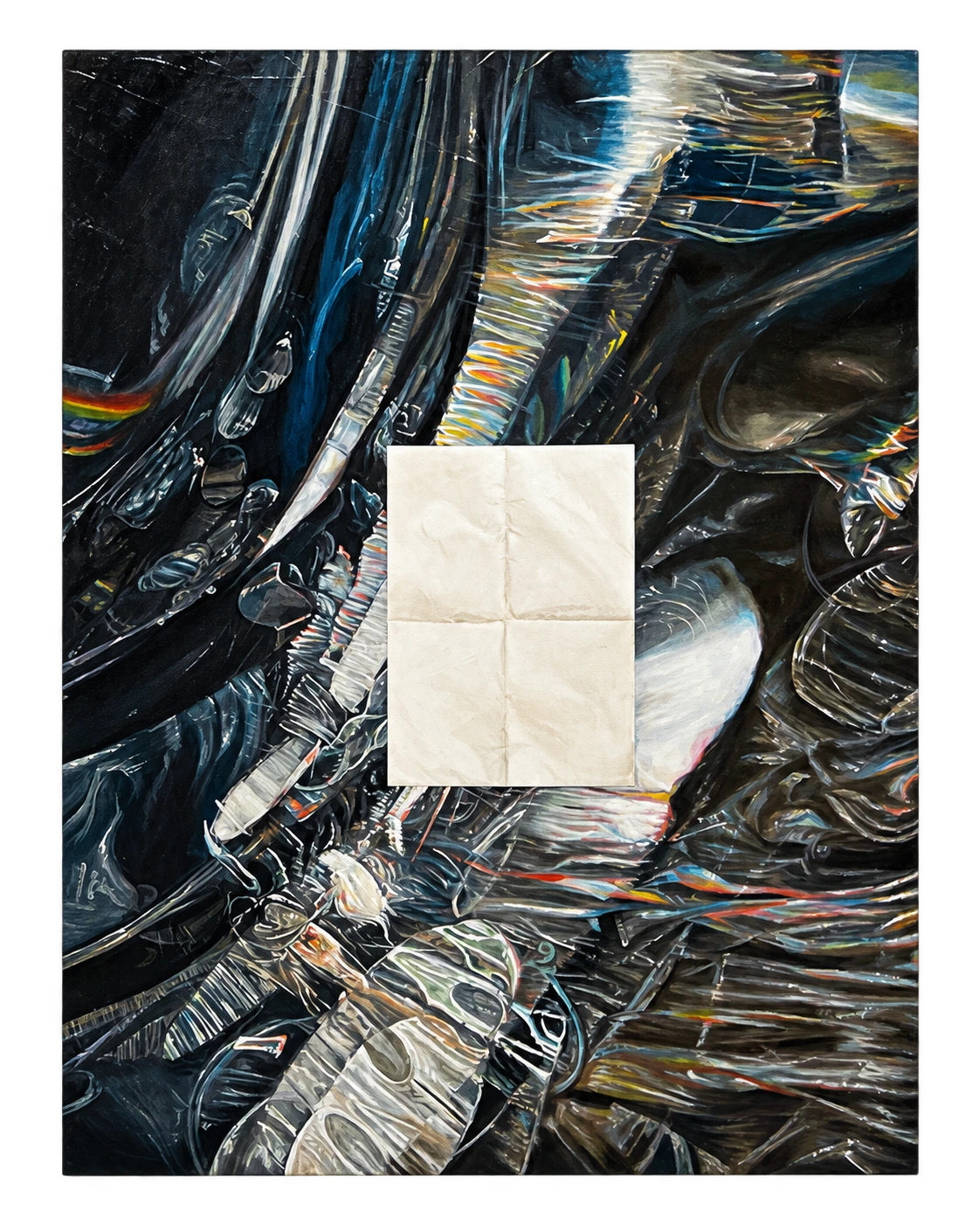
Through visual mimicry and photorealism, Visual Noise brings attention to peripheral objects we often overlook. The works highlight dissonance and contradiction, telling a story of observation and awareness.
By reflecting the contradictions within objects and the imposition of foreign elements, the series considers personal dilemmas and cultural contradictions. It gives visual form to the obscuring and obstruction of progress.
The artist calls this series Visual Noise. We’ve added the subtitle to tell the three paintings apart. AI was used to separate the painting from the room in the photo.
The artist calls this series Visual Noise. We’ve added the subtitle to tell the three paintings apart. AI was used to separate the painting from the room in the photo.
The artist calls this series Visual Noise. We’ve added the subtitle to tell the three paintings apart. AI was used to separate the painting from the room in the photo.
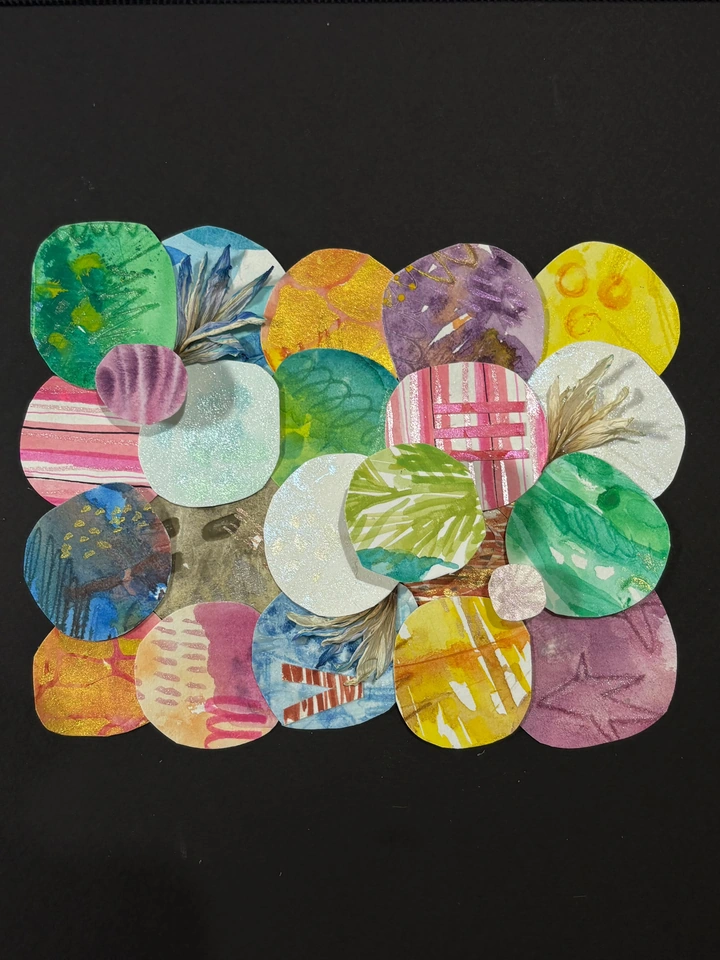
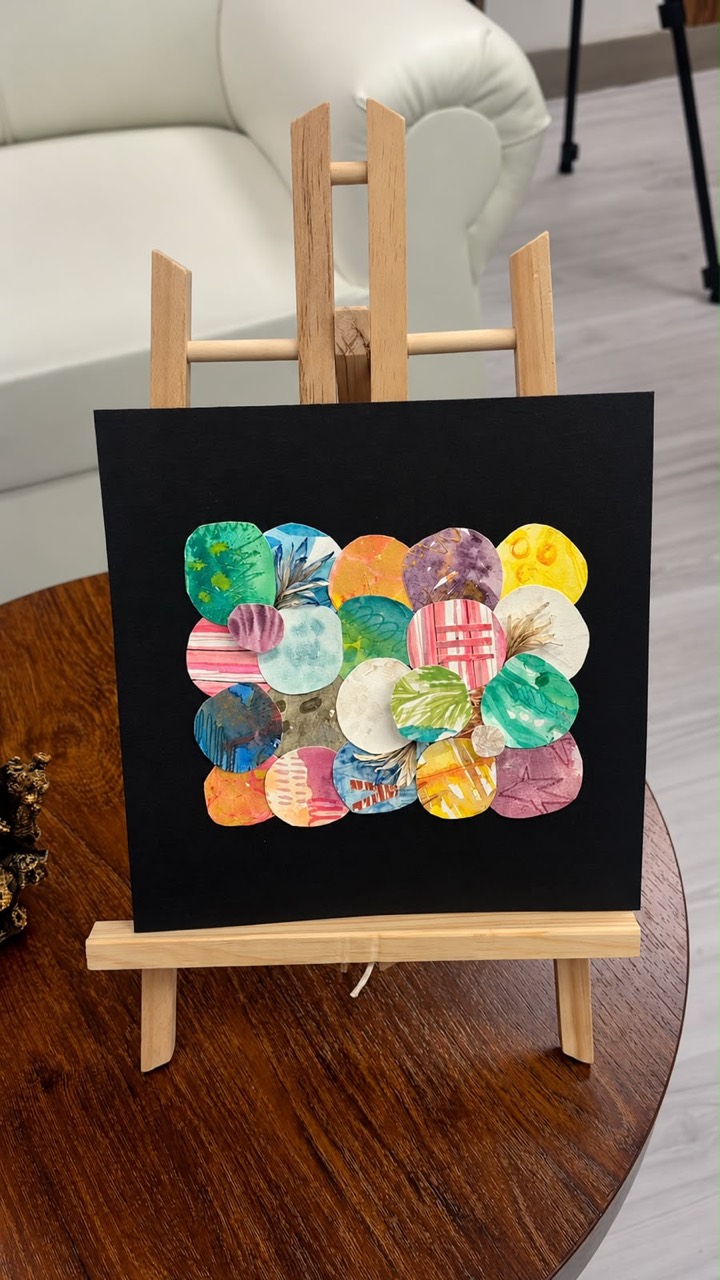
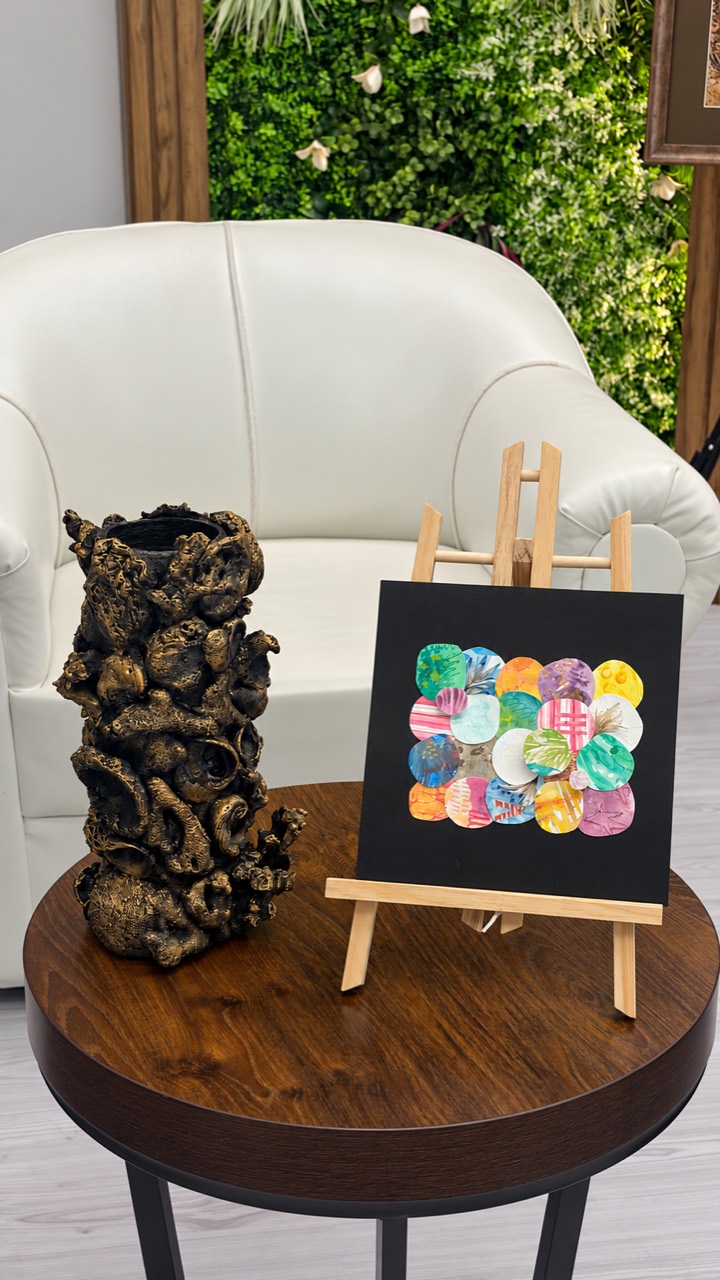
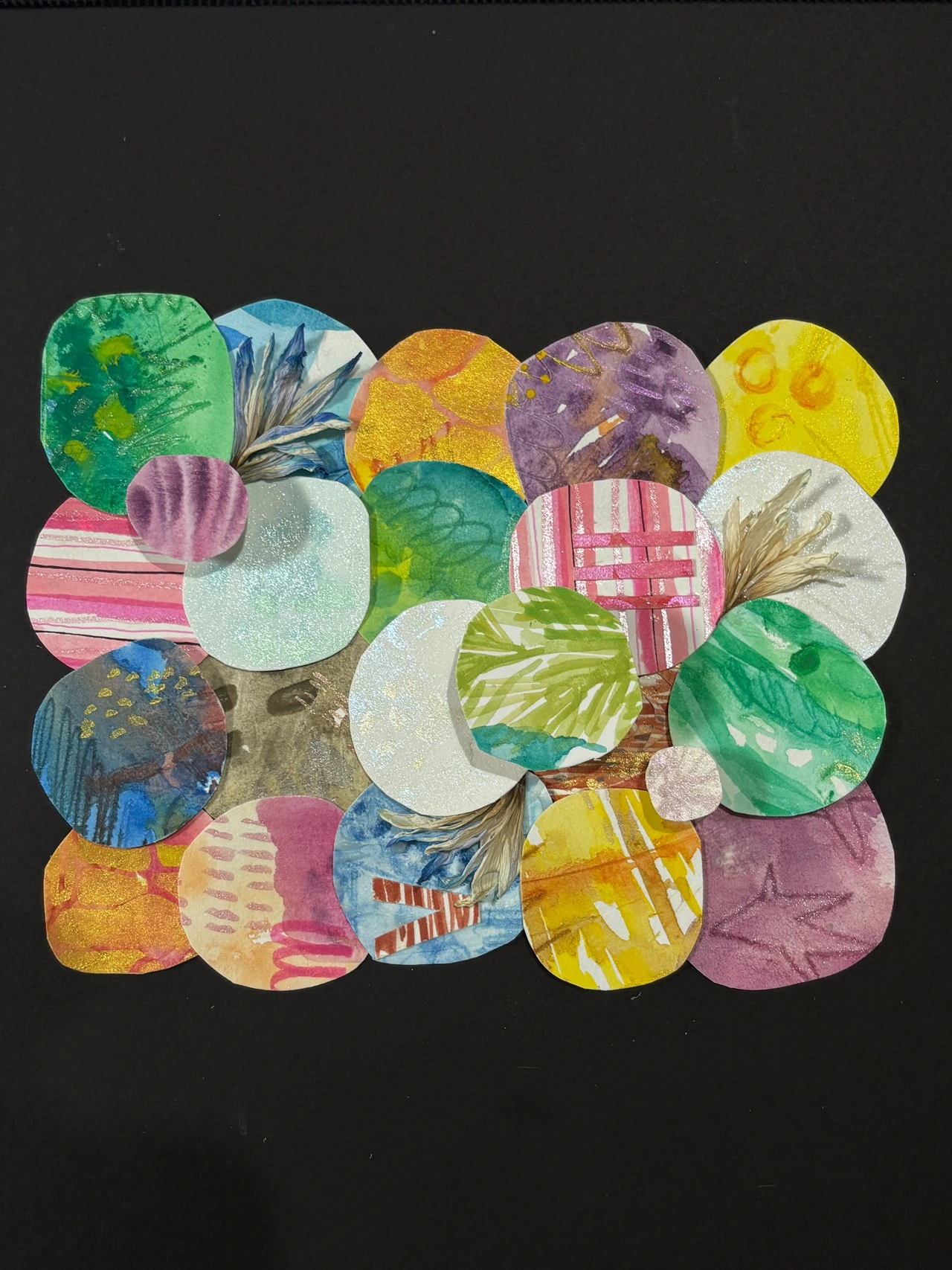
Watercolor fragments and dried petals gather into a collage of brief encounters, shared smiles and memories that continue to bloom.
Kolaheng Papel Series - IV
Read the artist’s statement
In my work, I often treat colors and shapes as fragments of memories—little pieces of moments that have stayed with me. While my previous works have been reflections of my own experiences, Shared Memories extends beyond the personal. It holds traces of the people I have met, the strangers I have exchanged smiles with, and the fleeting moments of connection that quietly become part of us.
The petals symbolize how even the smallest gestures and simplest encounters can leave a lasting impression. Like flowers slowly blooming, these little memories gather and unfold within my heart, reminding me that not all meaningful moments need to be grand or familiar. Sometimes, a shared smile is enough to make something bloom.
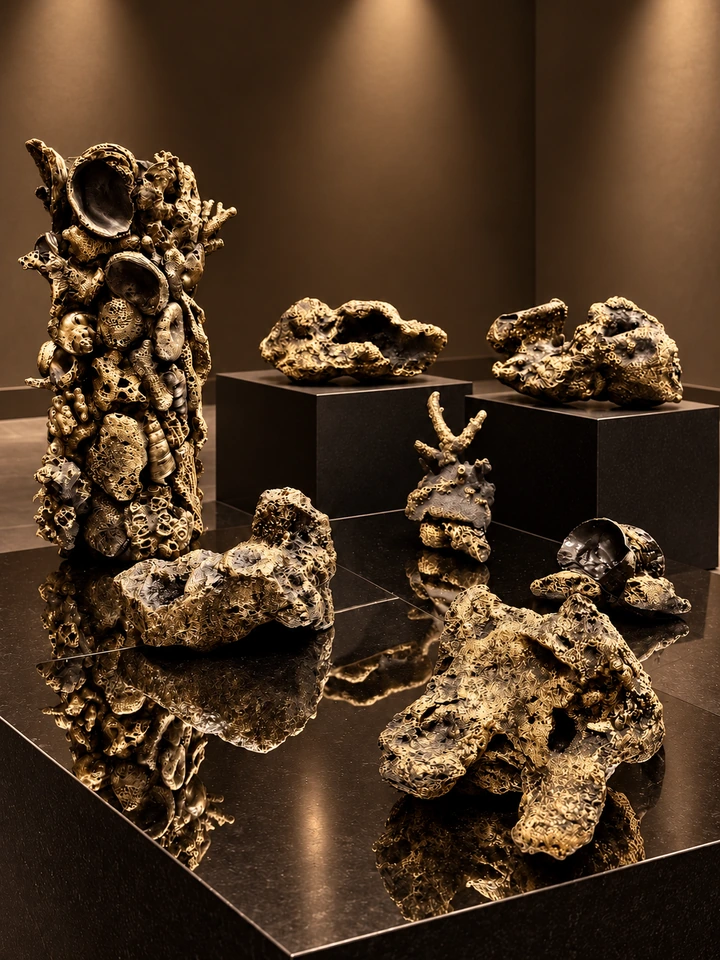
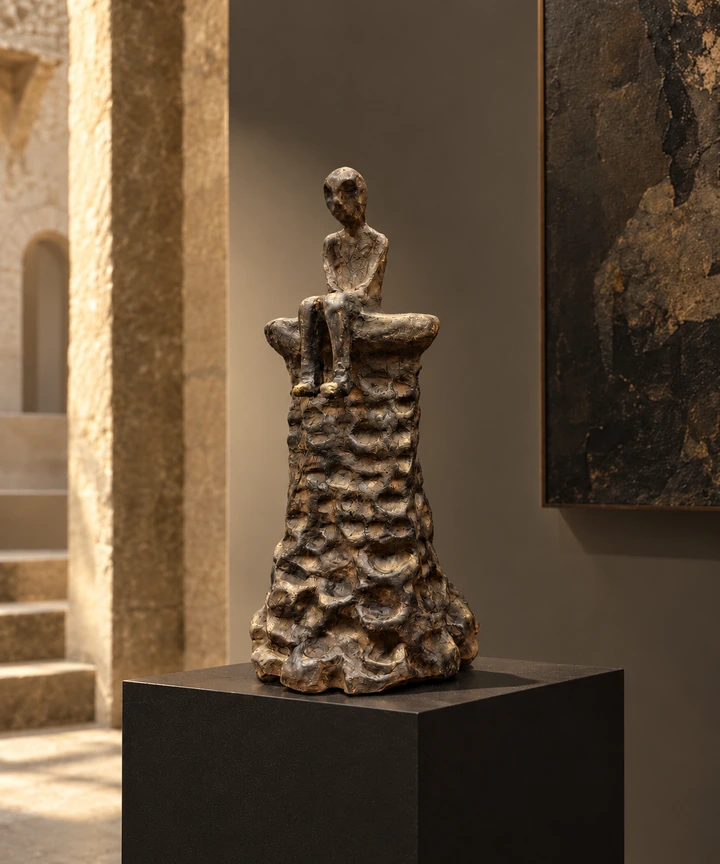
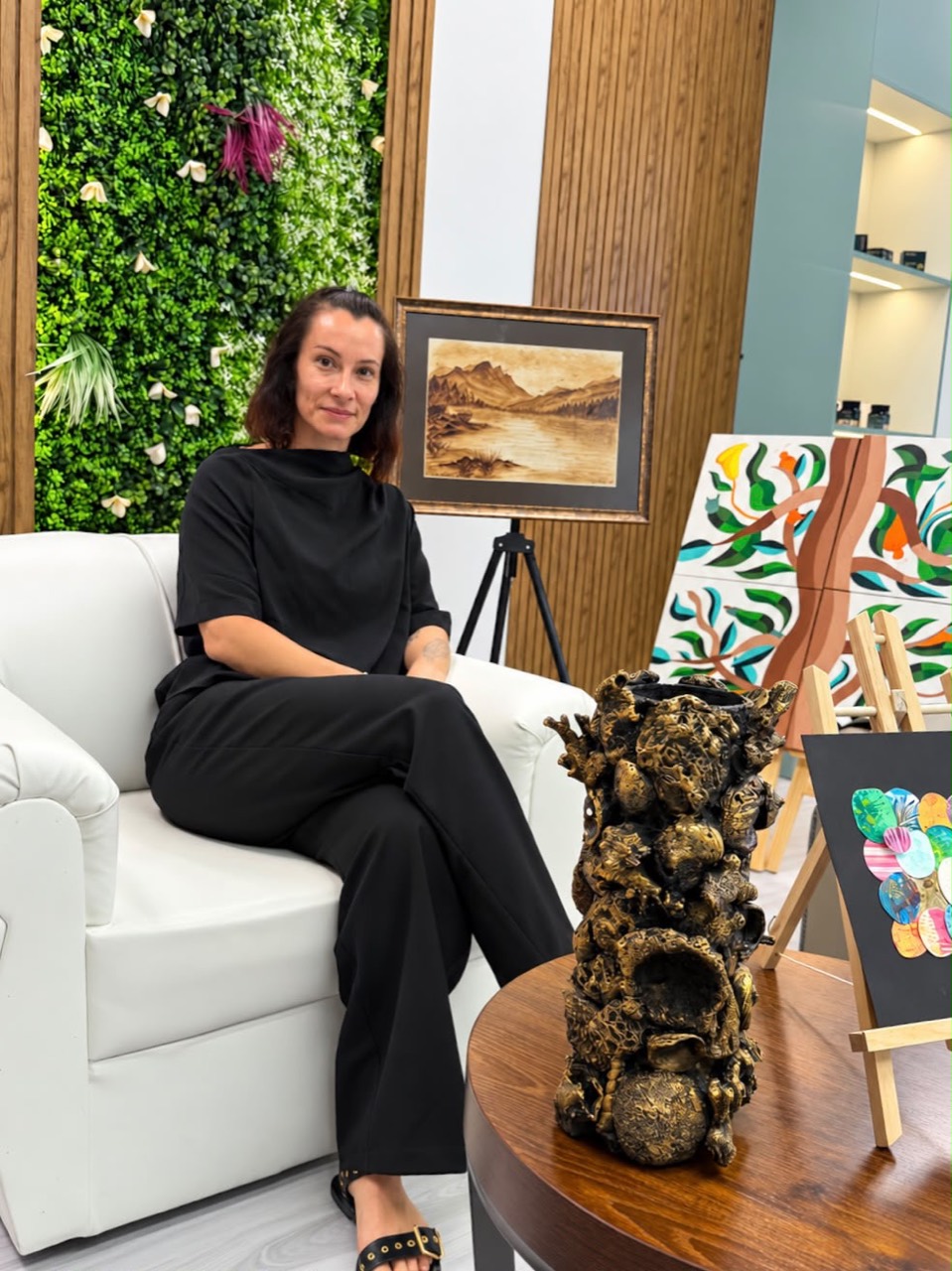
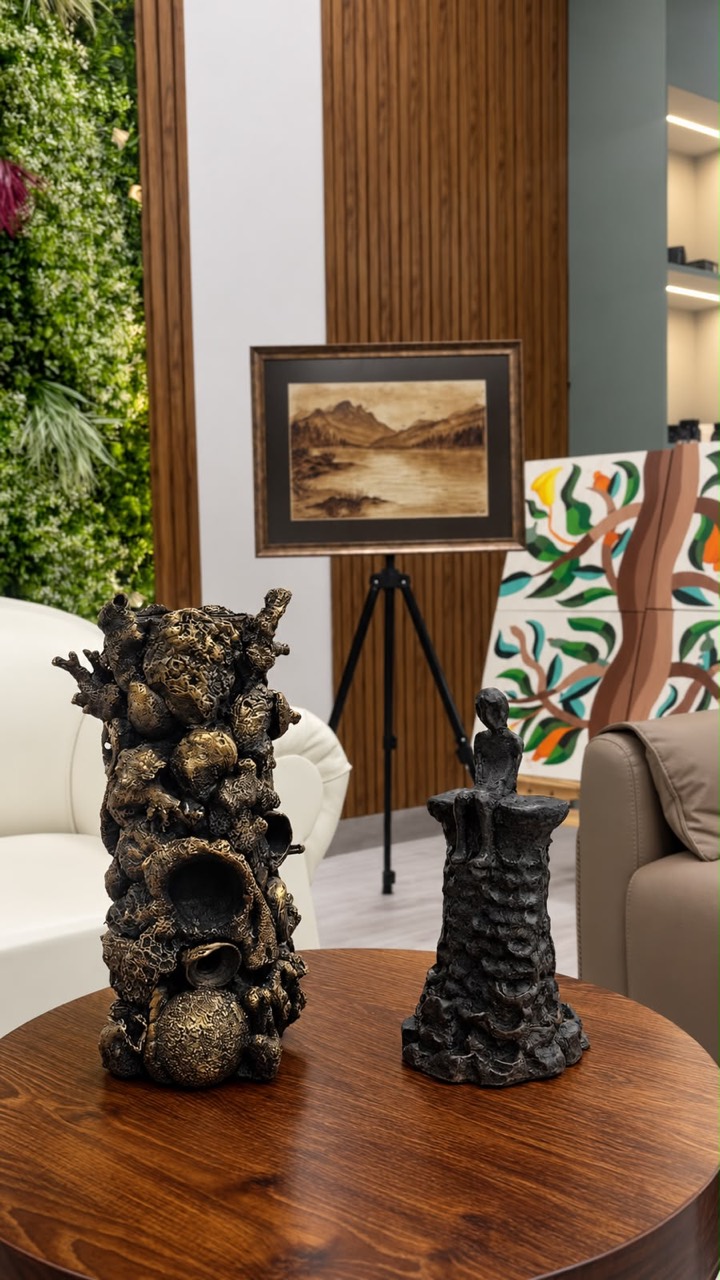
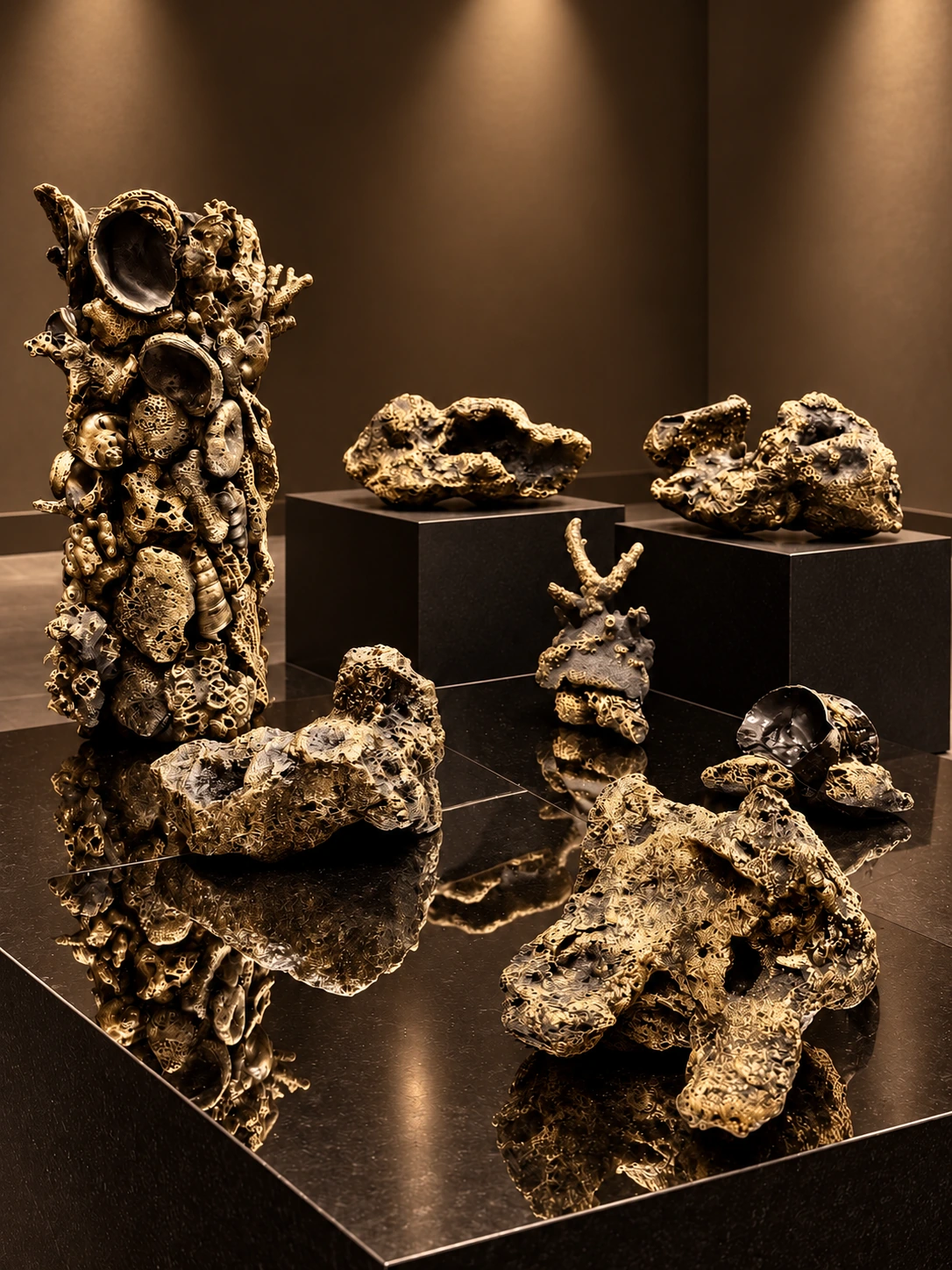
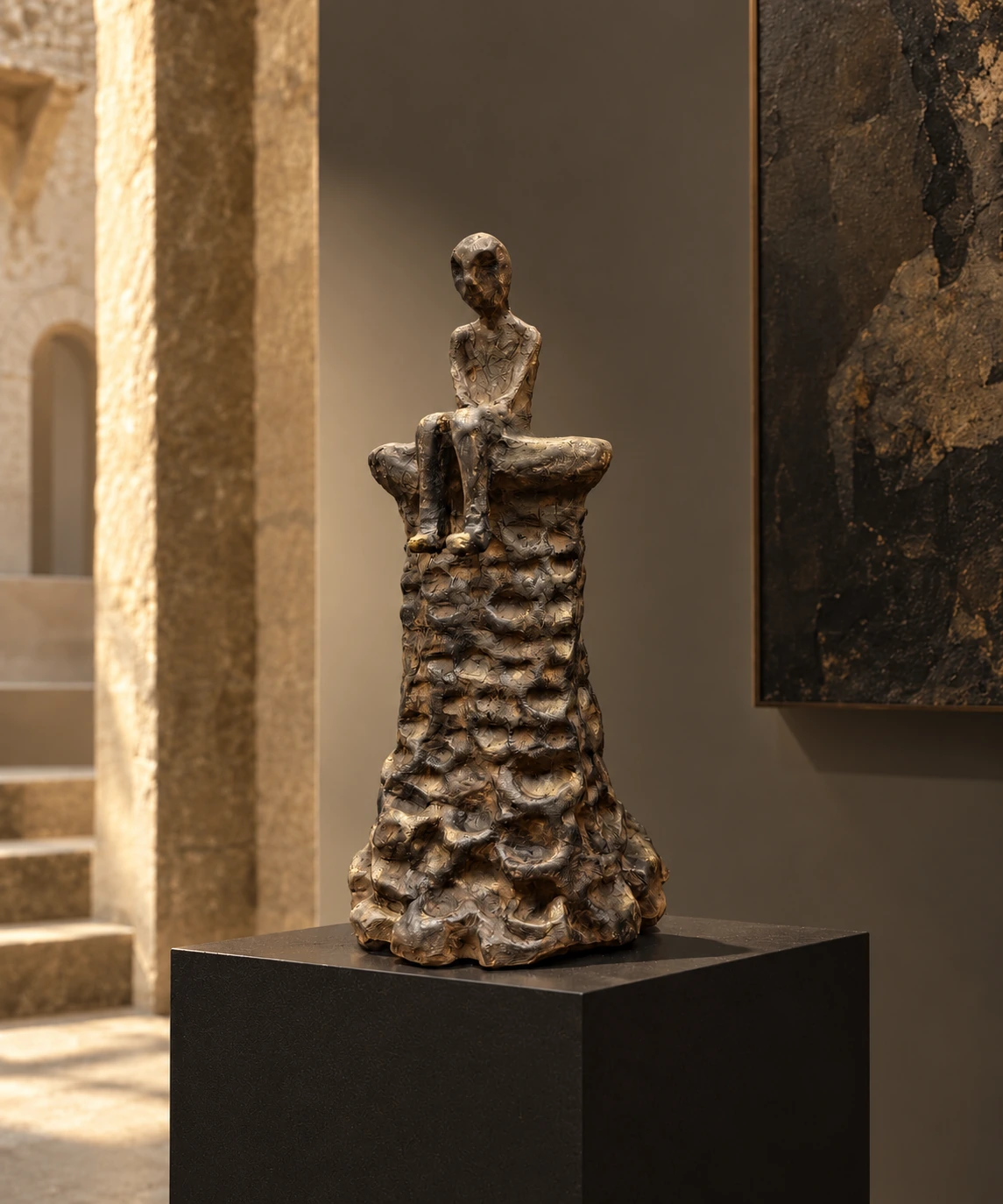
Cristina describes forms inspired by coral, shells and stone. Their worn surfaces invite a closer look at the traces left by the sea and the life it holds.
A small seated figure rests on a rough, wall-like structure. Cristina draws on the weathered buildings of Volterra to consider how briefly we live, and what we leave behind.
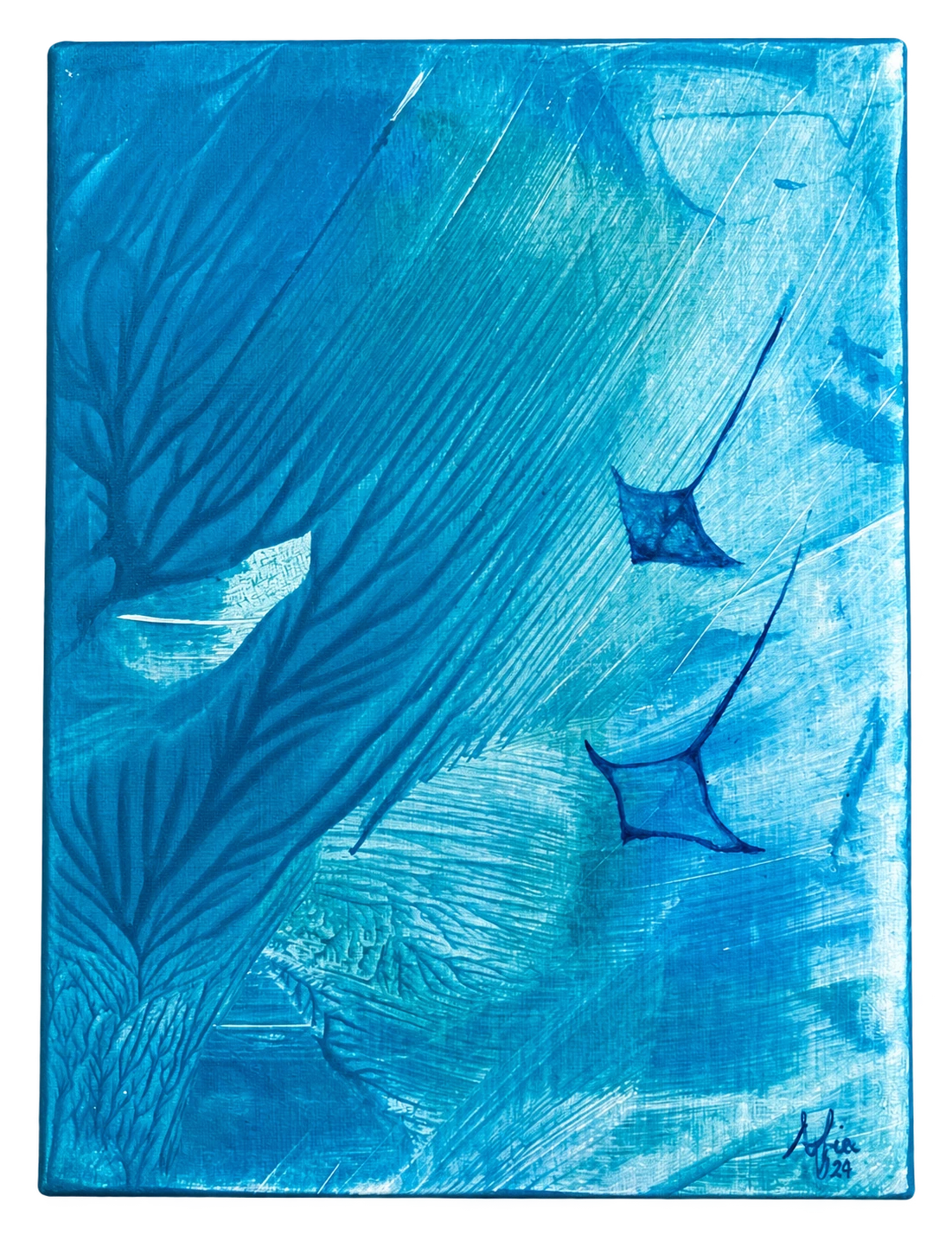
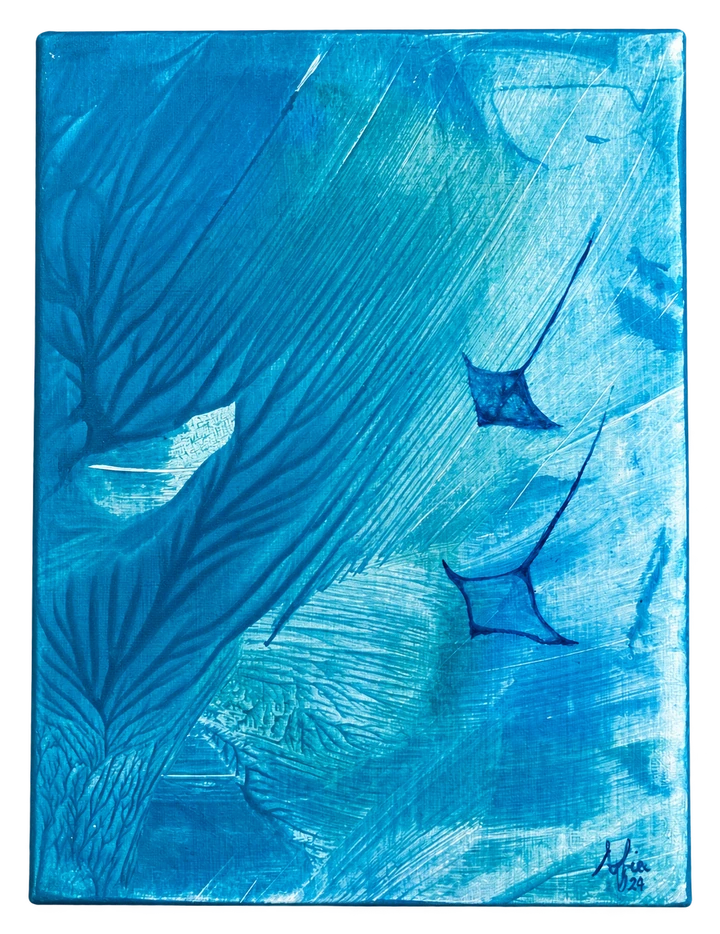
Rays move through sweeping turquoise passages. Long, directional brushstrokes and visible canvas texture give the painting a sense of depth and quiet motion.
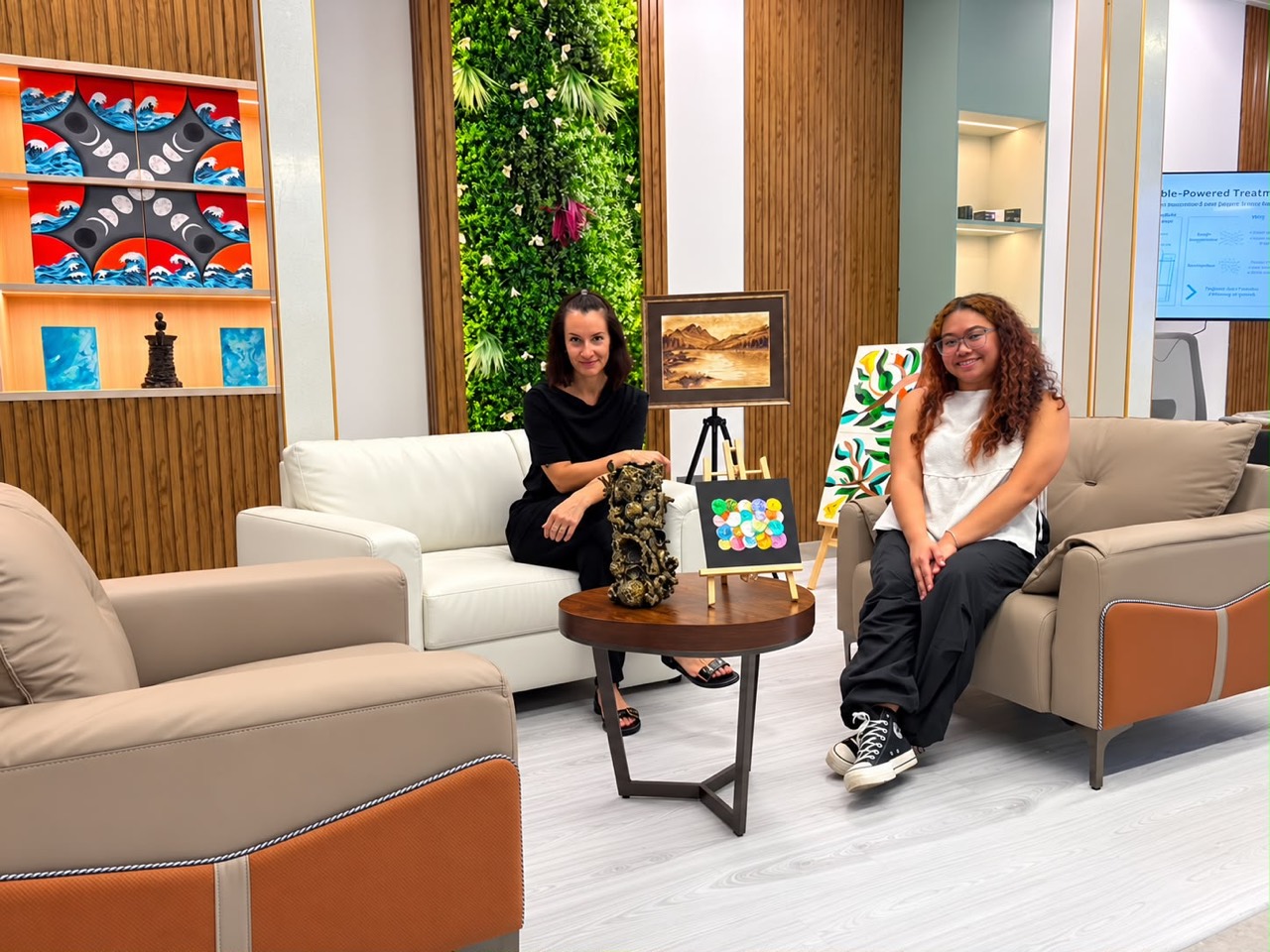
We’re at the NOA Sustainability Lab in Dubai World Trade Centre. Look for the NOA sign beside the Health & Safety Hub registration desk.
NOA Sustainability Lab, beside the Health & Safety Hub registration desk.See the space and our proposed display
A first layout based on these photos. Final positions will depend on wall measurements, artwork sizes and NOA’s mounting arrangements.
The main lounge
Start with water. Keep Compass of the Sea together as one four-panel work, with Sophiko’s two blue paintings nearby. Use a clear wall or a borrowed display panel rather than covering the planting.
Give Cristina’s sculptures their own space on a stable shelf or plinth, once their size and weight are checked. Keep Shared Memories at a comfortable viewing height, away from direct sunlight. Use the screen for close-up photographs and artists’ stories.
Try Tamer’s three Visual Noise paintings together on the solid inner wall, subject to measurement. Keep the glass clear. Place Whispers Within the Leaves on a second wall or display panel, with room to step back.
Keep the doorway, tactile floor route and access to controls clear. Leave space to sit and to view work from a wheelchair. Use existing fittings or freestanding panels approved by NOA.
Art can start a conversation.
A painting can make us spend time with something we usually pass by. These works give us a way into conversations about water, wildlife and the things we choose to keep.
Water is part of our lives
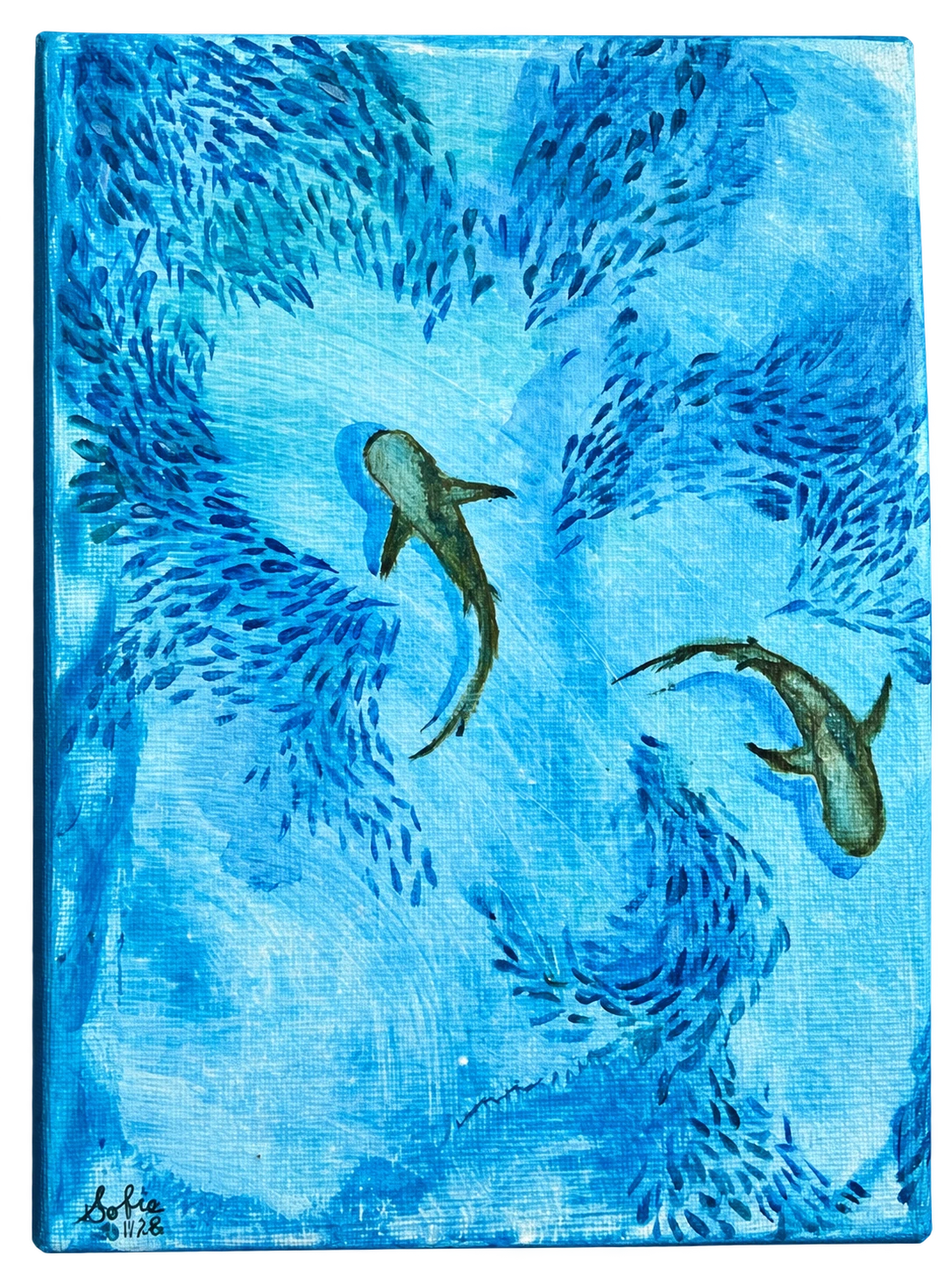
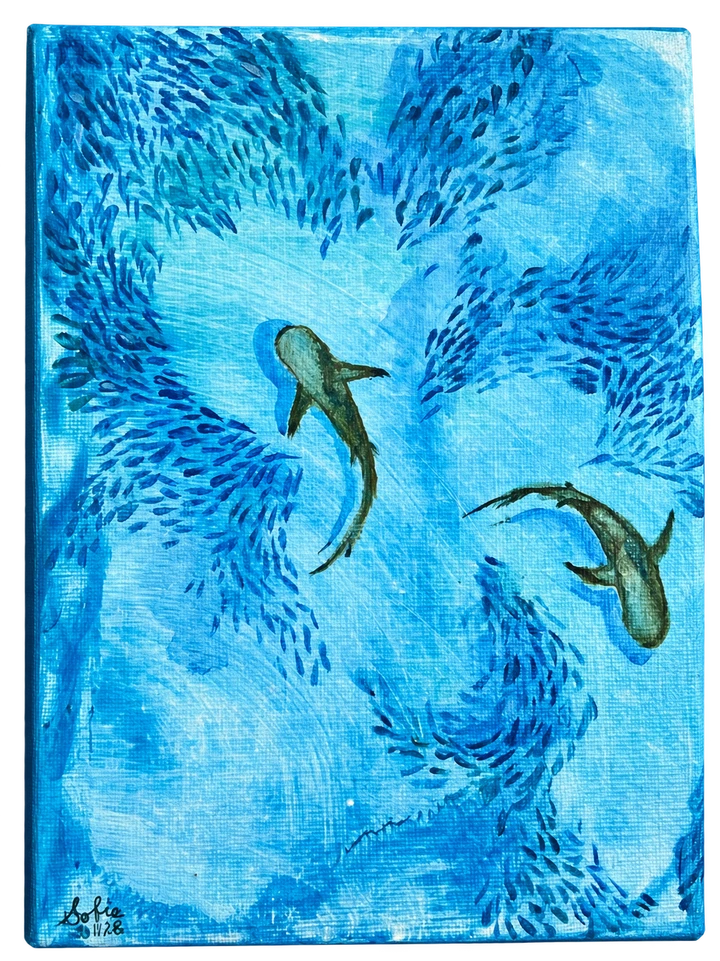
Chandni’s tides and Sophiko’s sea life invite us to spend time with the ocean. What do we notice in water, and what would we miss if it changed?
In Shared Memories, Ms. Petunya combines watercolor collage with dried petals. The work opens a conversation about memory, everyday encounters and the natural materials artists choose.
Tamer interrupts familiar images. Cristina finds stories in forms shaped by the sea and by time. Together, they open a conversation about what we notice, value and keep.
A place, an object, a living thing. Choose a work, talk about what you see, and take that question with you.
Simple ways to make the exhibition less wasteful
For this show, we propose borrowing display furniture, reusing frames and packing materials, and offering a QR guide alongside a few large-print copies. Use the existing lights and screen where suitable, and switch them off when the space closes.
These are choices for the exhibition team to confirm. The works’ subjects do not, on their own, tell us their environmental footprint.
Some catalogue images were edited with AI to improve clarity or remove the surrounding room. The three interior venue photos were tidied to remove the green markings and show the space before installation. The photographs in Scenes from WETEX are shown as supplied. Where we haven’t received an artwork’s title, we’ve used a description and noted it with the work.

 Meet the artist
 Meet the artist
 Meet the artist
 Meet the artist
 Meet the artist